

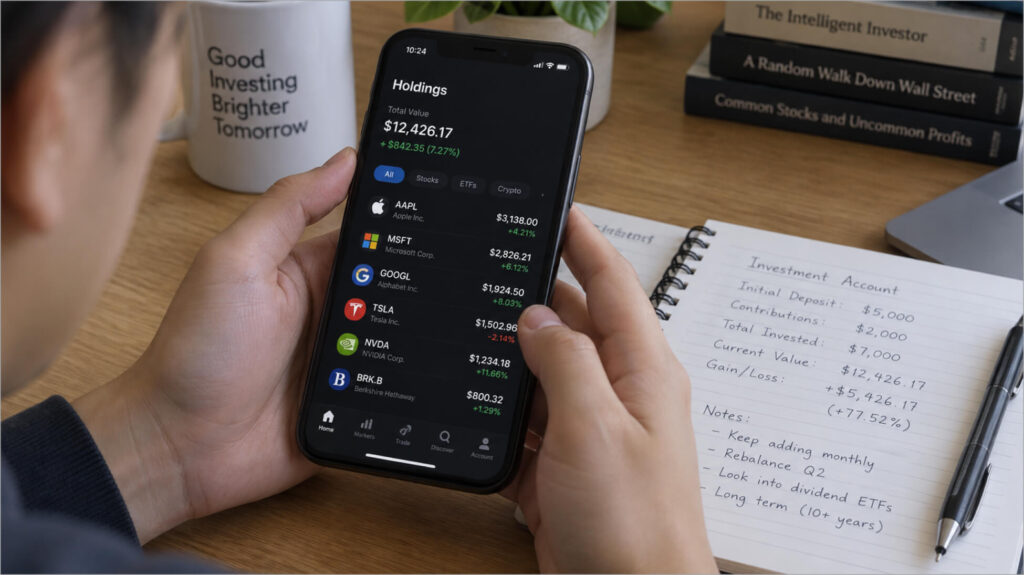
More Malaysians than ever now buy US shares through apps like moomoo, Tiger, Webull or Interactive Brokers. Apple, Nvidia, an S&P 500 ETF — a few taps and it's done.
What most people don't realise: if you pass away holding more than US$60,000 in US assets, the US government may tax your estate at up to 40% — before your family receives a single cent.
Malaysia abolished its own estate duty in 1991, so this catches many families completely off guard.
The rule in one line
When a non-US person dies, the US can tax their US-situs assets — things that "belong" to the US — above a US$60,000 exemption.
For US citizens, that exemption is US$15 million from 2026. For a Malaysian, it's still US$60,000 — a figure that hasn't changed since the 1970s and isn't adjusted for inflation.
What counts as a US asset?
Usually caught:
- Shares in US companies (Apple, Tesla, Microsoft, etc.)
- US-domiciled ETFs and mutual funds (e.g. VOO, SPY, QQQ)
- US property
- US retirement accounts (401(k), IRA)
Even if you bought them through a Malaysian or Singapore app. What matters is where the asset is from, not where your broker is.
Usually not caught:
- Ordinary cash deposits in a US bank (not linked to a US business)
- Life insurance proceeds paid on your death
Fund domicile rules are technical. Confirm the status of your specific holdings with a licensed investment professional.
How much could your family actually pay?
Illustrative only. Based on the US federal estate tax rate schedule, after the US$13,000 credit that creates the US$60,000 exemption. Converted at RM4.20 = US$1.
| US portfolio at death | Estimated US estate tax | In ringgit (approx.) | % of portfolio lost |
|---|---|---|---|
| US$60,000 | US$0 | RM0 | 0% |
| US$100,000 | US$10,800 | RM45,000 | 10.8% |
| US$300,000 | US$74,800 | RM314,000 | 24.9% |
| US$500,000 | US$142,800 | RM600,000 | 28.6% |
| US$1,000,000 | US$332,800 | RM1.4 million | 33.3% |

A real-life picture: Daniel, 42, an engineer in Petaling Jaya, has been investing RM8,000 a month into US stocks since 2018. His portfolio is now worth about US$300,000. If something happened to him tomorrow, his wife and two children could face a US tax bill of roughly RM314,000 — and wait a year or more before they can touch the rest.
The better his portfolio performs, the bigger that bill becomes.
It's not just the tax. It's the waiting.

Even if your portfolio is below US$60,000, your family may still be stuck.
Here's what typically happens after a Malaysian US-stock investor passes away:
- The broker freezes the account.
- Your family must prove the tax position to the IRS, usually by filing Form 706-NA within 9 months of death if US assets exceed US$60,000.
- The IRS issues a transfer certificate confirming the tax is settled. Processing can now take 9 to 18 months.
- The broker releases the assets — only after its own documentation checks, which may include your Malaysian grant of probate or letters of administration.
Many institutions now ask for IRS clearance even when no tax is due. Without a valid will in Malaysia, step 4 gets slower still, because your family must first apply for letters of administration here.
That's potentially two years of frozen money for a family who may need it most.
Why Malaysians are more exposed than others
- No US–Malaysia estate tax treaty. The US has estate tax treaties with about 16 countries, including the UK and Japan. Malaysia isn't one of them, so no extra relief applies.
- "Set and forget" investing. Monthly auto-invest plans quietly push portfolios past US$60,000 faster than people notice.
- Families often don't know the account exists. App-based accounts have no paper statements. If no one knows the login or the broker's name, the assets can sit unclaimed.
Don't skip your insurance planning. It's the foundation of your portfolio.

Many investors spend hours picking stocks and tracking returns, but very few spend an hour reviewing their protection.
A return is only a return if you get to keep it. Illness, accidents and death don't wait for a good market. Without protection, one uncertainty can wipe out years of gains.
Look at Daniel again. That RM314,000 tax bill equals about 3 years of his monthly investing, gone in one event.
| If this happens… | Without protection | With protection |
|---|---|---|
| RM150,000 hospital bill | Sell shares to pay, maybe in a down market | Medical card pays the bill, shares stay invested |
| Critical illness, no income for 2 years | Monthly investing stops, savings run down | Lump-sum payout replaces income |
| Passing away with US$300,000 in US stocks | Family pays ~RM314,000 tax and waits 12–18 months | Insurance payout gives family cash now, portfolio stays intact |
Investing grows your wealth. Insurance makes sure you keep it.
Before you add more to your portfolio, make sure the foundation is in place:
- Medical card, so a hospital stay never forces you to sell
- Critical illness cover, so your income and investing plan continue
- Life cover, sized to your debts, your family's needs and your US asset exposure
Get protection right first. Then invest with confidence.
5 things you can do now

1. Take stock — literally. List every brokerage account, the platform, and the approximate US asset value. Update it once a year.
2. Write a will that covers your overseas assets. A clear will speeds up the Malaysian side of the process and tells your executor exactly what exists and who receives it. Without one, your family goes through letters of administration and the Distribution Act decides who gets what.
3. Tell someone where things are. A simple asset record — platforms, account numbers, contact details — kept with your will, so your executor doesn't have to hunt for it.
4. Make sure your family has cash while they wait. If US assets are frozen for 12–18 months, and part of them goes to the IRS, your family still has bills to pay. A legacy insurance plan sized to your US exposure can pay out in ringgit, outside the US process, and help cover any estate tax so the portfolio stays intact.
5. Review how your investments are held. Fund domicile and account structure can change your exposure. This is a question for a licensed investment adviser — but you should ask it before your portfolio grows further, not after.
Frequently asked questions
Does US estate tax apply if I bought US stocks through a Malaysian app?
Generally yes. The tax depends on whether the asset is US-situs (such as shares in US companies or US-domiciled ETFs), not on where your broker is based.
Is the US$60,000 exemption per account?
No. It applies to your total US-situs assets across all accounts and platforms combined.
Does Malaysia have estate tax?
No. Malaysia abolished estate duty in 1991. The tax discussed here is imposed by the US on US assets.
What if my US stocks are worth less than US$60,000?
No US estate tax is due, but your family may still need IRS clearance or other documents before the broker releases the shares. A will and a clear asset record make this much easier.
Can my family just log in and sell the shares after I pass away?
No. Doing so can breach the broker's terms and the law. Once the broker is notified of the death, the account is frozen until the estate process is complete.
Should I get insurance first or invest first?
Protection first. Your medical, critical illness and life cover protect your income and your portfolio. Without them, one uncertainty can force you to sell investments at the wrong time.
Can life insurance help with US estate tax?
Life insurance proceeds paid on your death are generally not treated as US-situs assets. A suitable plan can give your family ringgit liquidity to cover any tax and living costs while US assets are frozen.
Holding US stocks? Let's make sure your family isn't left waiting.
Our senior authorised advisors can help you map your overseas assets, put a proper will in place, and work out how much cover your family would need to bridge the gap. No consultation fees.
Disclaimer: This article is for general information only and does not constitute advice for your specific situation. Premium figures are illustrative. Coverage, deductible terms and exclusions vary by insurer and plan; please refer to the product disclosure sheet and policy contract. MET Advisory Malaysia Sdn Bhd distributes insurance products under Bank Negara Malaysia jurisdiction.




 WhatsApp Us
